



Warning: Images of deceased persons may appear | See the Yuwaalaraay / Gamilaraay pronunciation guide here
Yuwaya Ngarrali
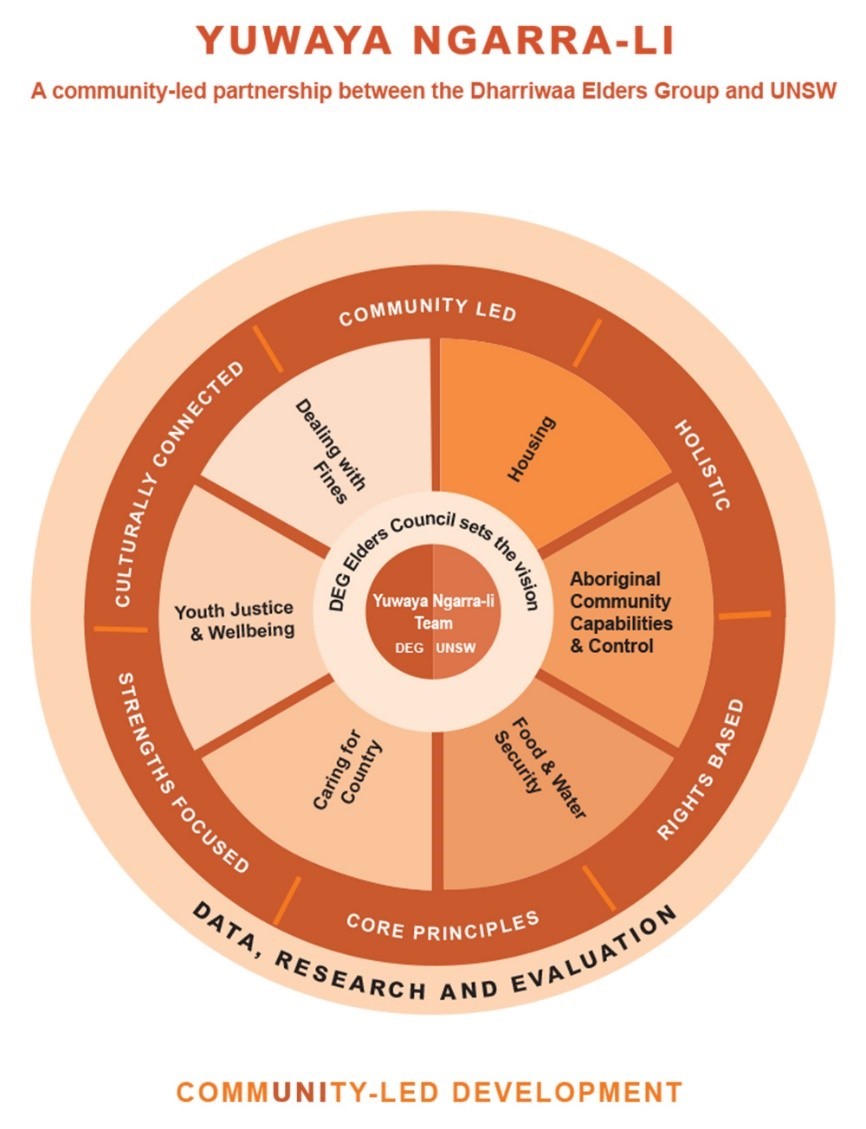
Yuwaya Ngarra-li (vision) is a community-led partnership between the Dharriwaa Elders Group, an Aboriginal community-controlled organisation working for cultural management and community development in Walgett for more than 25 years, and UNSW collaborators with expertise in criminology, public health, food and water security, engineering, housing, social policy and evaluation.
The Dharriwaa Elders will lead a collaboration with UNSW and other supporters to grow our individual and community strengths and assets. We aim to restore a robust belonging to thriving families, community and country, while making our place in the nation and sharing our learning with other communities
We are working to improve the wellbeing, social, built and physical environment and life pathways of Aboriginal people in Walgett through collaborating on evidence-based initiatives, research and capacity building. We are also refining and evaluating this as a model of community-university collaboration: CommUNIty-Led Development.
Our programs
Aboriginal Community Capabilities and Control: Long-term priorities for Yuwaya Ngarra-li include supporting the capacity, governance, advocacy and leadership of Walgett Aboriginal Community Controlled Organisations (ACCOs), and the redirection of government funding towards strengths-based, holistic, community-led initiatives in Walgett. The building and centring of Aboriginal community capabilities and control in Yuwaya Ngarra-li's work is a key enabler of all other projects.
Contact: Wendy Spencer and Vanessa Hickey,
Food and Water For Life: Food and water security is a great concern in Walgett, and the Dharriwaa Elders Group and Walgett Aboriginal Medical Service have been working to improve access to fresh, nutritious food and safe drinking water in Walgett for many years. The Food and Water for Life program involves community-led initiatives working to improve food and water security at place-based and systems levels.
Contact: Tyrin Hickey and Loretta Weatherall,
Youth Justice and Wellbeing: the Dharriwaa Elders Group’s vision is that Aboriginal children and young people in Walgett can learn, work, be safe, supported and thrive within a robust sense of belonging to their families, community, culture and Country. The Two River Pathway to Change program is a locally developed ACCO-led model that aims to reduce criminalisation and improve wellbeing and positive pathways for Aboriginal young people in Walgett.
Contact: Loretta Weatherall,
Dealing with Fines: Police and court-issued fines have a detrimental impact on Aboriginal people in Walgett, leading to cycles of financial hardship, poverty and criminalisation. The Dealing with Fines project supports community members to access appropriate legal advice and to work off their fines through a Work and Development order including participation in training courses, mental health treatment and other activities.
Contact: Wendy Rose,
Housing: The dire shortage and quality of housing in Walgett has been a long-term priority for the Dharriwaa Elders Group. Housing for Elders, young people in contact with the justice system, and crisis accommodation are current areas of focus for Yuwaya Ngarra-li.
Contact: Samantha Rich, UNSW
Caring for Country: Aboriginal people in Walgett describe the Ngamaay (Namoi) and Baawan (Barwon) rivers as the lifeblood of their community, however the poor state of local rivers in recent years has had a massive negative impact on community health and wellbeing. Our Caring for Country program links Aboriginal culture and science with western science to renew the health of the river systems and groundwaters, including the work of the Ngarrangarra-li Walaaybaa (Look After Home Country Rangers)/Walgett River Rangers.
Contact: Wendy Spencer,
Research and Evaluation: Led by the Dharriwaa Elders Group, our approach is focused on building community control, changing lives, evidence-based solutions, and systems change. Methods including administrative data analysis, community surveys, learning with & from practitioners, and outcomes harvesting.
Contact: Ruth McCausland, Rebecca Reeve, May Miller-Dawkins